Most case studies lead with adjectives. This one leads with a spreadsheet.
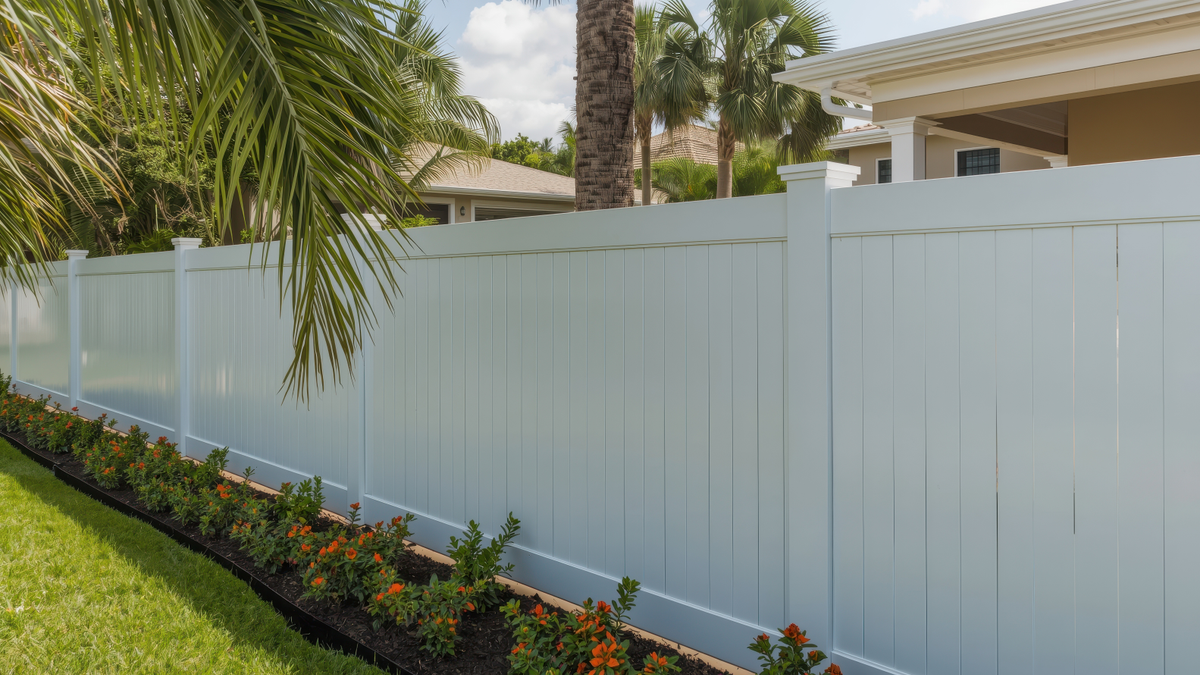
For the past 17 months, a Florida fence company — a multi-location retailer and installer serving homeowners and contractors across the state — has run an UpChat AI website agent as the front door to its website. No live chat team behind it. No agents on standby. Just the AI, trained on the company's products, services, and service areas, handling every conversation end to end.
We exported the full conversation log: 8,652 conversations between February 2025 and July 2026. Here's what actually happened.
The Results at a Glance
An AI website agent handled 8,652 website conversations for a Florida fence company over 17 months, capturing contact information from 3,068 visitors — with an 89% capture rate on sales-intent conversations. Nearly half of all activity (47%) happened outside business hours, when no human team was available to respond.
| Metric | Result |
|---|---|
| Total conversations handled | 8,652 |
| Leads captured (email or phone) | 3,068 |
| Capture rate on sales-intent chats | 89% |
| Capture rate on customer service chats | 84% |
| Conversations outside business hours | 47% |
| Captured leads arriving after hours | 4 in 10 |
| Weekend conversations | 1 in 5 |
That's roughly 180 new leads per month, every month, without a human touching the chat widget.
Who's Asking — and What They Want
Fence buyers don't browse quietly. They show up with a project in mind and questions that need answers before they'll hand over a phone number.
Across 8,652 conversations, the demand breaks down clearly:
- Quotes and pricing dominate. "Quote," "estimate," and "pricing" appeared in over 3,400 conversation summaries. Fence shoppers want a number, fast.
- Vinyl is king in Florida. Vinyl fencing came up 1,882 times — more than wood (707), aluminum (579), and chain link (454) combined.
- Gates are their own category. 1,429 conversations involved gates — from standard walk gates to automatic sliding driveway gates.
- Real logistics, too: financing (248 mentions), HOA requirements (111), permits (50), and hurricane concerns (49) — the kind of Florida-specific questions a generic website AI chatbot can't fake its way through.
The agent didn't just field these questions. It worked each one toward a next step: confirming the service area by zip code, asking whether the visitor had measurements or a survey, offering professional installation or DIY materials, and collecting contact details to route the request to the right team.
The 5 A.M. Lead
Here's the part no staffing plan solves.
At 5:07 on a Thursday morning, a homeowner in the Jacksonville area opened the chat and asked for a vinyl fence quote. The agent confirmed his zip code was in the service area, asked about property measurements, offered an online quote, and collected his email — all before the business opened, all without waking anyone up.
He wasn't an outlier. That same month, at 4:01 A.M., another visitor typed out a complete materials list: eight end posts, a corner post, four thru posts, nine white vinyl privacy sections, two gate kits, thirteen post caps. The agent handled the spec-level detail and captured his email for the sales team to price it out.
The pattern holds across the full dataset:
- 47% of all conversations happened outside Monday–Friday, 9-to-5 Eastern.
- Four in ten captured leads arrived after hours.
- Even the overnight window — midnight to 6 A.M. — produced over 300 conversations.
For this company, after-hours coverage isn't a rounding error. It's nearly half the pipeline. A "We're offline — leave a message" widget would have put every one of those conversations at risk of ending on a competitor's website.
A Cooling Market Made Every Visitor Count More
Here's the context that makes this deployment more interesting than a bull-market success story: Florida's housing market spent this entire period cooling off.
After years of pandemic-era price surges, the state shifted into what analysts describe as a normalization. Statewide median listing prices in the first half of 2025 ran about 6% below the same period in 2023, and Realtor.com's 2026 forecast projects prices across Florida's eight largest metros to fall another 1.9% — while the national market is expected to gain 2.2%. Fewer home sales and tighter homeowner budgets ripple directly into home improvement categories like fencing.
You can see the cooldown's fingerprint in this company's chat data — just not where you'd expect. Captured leads in the first half of 2026 came in 51% higher than the same period a year earlier, from 960 to 1,450. And conversations with clear sales intent nearly doubled over the same comparison, from 642 to 1,258. Casual browsing thinned out as the market cooled; the visitors who kept showing up had a project in hand, and they wanted a quote.
That's the down-market math most businesses miss. When a market cools, the buyers who remain are disproportionately serious — which means every missed conversation costs more than it did in the boom. A quote request that slips away at 9 P.M. on a Sunday isn't one of a hundred this month; it might be one of ten. Around-the-clock coverage isn't a growth hack in that environment. It's how you defend pipeline in a market where you can't afford to leave any of it on the table.
You can't control mortgage rates or the housing cycle. You can control whether someone answers when a serious buyer finally shows up.
Beyond Sales: The Service Conversations That Keep Customers
About 1,054 conversations were customer service rather than new sales — and the agent captured contact info and routed 84% of them correctly.
Two real examples from the log:
- A homeowner reported that a tree limb had fallen on her vinyl privacy fence and she needed a single panel replaced. The agent identified the fence type (vinyl privacy with lattice top), confirmed her zip code, noted she had photos of the damage, and routed the repair request to the team.
- A customer with an existing installation contract had finally received her HOA approval and didn't know what to do next. The agent collected her contact details and passed the update along so the office could get her scheduled.
Neither of those is a "lead" in the classic sense. Both are the difference between a customer who feels taken care of and one who calls a competitor for the repair.
What Made the Capture Rate Work
An 89% contact-capture rate on sales conversations doesn't come from a pop-up form. It comes from how the conversation is designed. Three things stand out in the transcripts:
1. The agent asks for contact info at the right moment. Not on message one. After the visitor has described their project, confirmed their zip code, and asked for a quote — when handing over an email is the obvious next step, not an interruption. This is the approach we recommend in our guide to how lead capture works.
2. Qualifying questions do double duty. Zip code confirms the service area and tells the sales team where the job is. "Do you have measurements or a survey?" filters tire-kickers and preps the estimator. Every question moves the sale forward. A well-trained website AI chatbot asks these questions the way a good salesperson would — conversationally, not as a form.
3. There's always a next step. Quote requests get routed to the sales team. Material questions get pointed to the nearest location. Repairs get logged with details. The agent never leaves a visitor at a dead end — which is exactly what we mean when we talk about how an AI website agent works.
What This Means If You Run a Home Services Business
Fence companies, roofers, pool builders, HVAC contractors — the pattern is the same. Your buyers research at night, compare quotes on weekends, and expect an answer the moment they ask. The data on AI agents versus traditional live chat backs this up across industries.
Four takeaways from this deployment worth stealing:
- Your after-hours traffic is bigger than you think. This company would have missed nearly half its conversations — and 4 in 10 of its captured leads — with business-hours-only coverage.
- Specificity builds trust. The agent knew vinyl from aluminum, understood HOA approvals, and confirmed service areas by zip code. Visitors give contact info to a chat that clearly knows the business.
- You don't need a big team — or any team. This entire dataset was generated with zero live chat staff. The AI handled 100% of conversations end to end, escalating by routing requests with full context rather than handing off mid-chat.
- Down markets reward coverage, not headcount. Even as Florida's housing market cooled, this company's captured leads grew 51% year over year — because the serious buyers still out there always found someone ready to take their project details, at any hour.
Frequently Asked Questions
How many leads can an AI chat agent capture for a home services company?
In this 17-month deployment, a Florida fence company captured 3,068 leads from 8,652 website conversations — about 180 per month. On conversations with clear sales intent, the agent captured contact information 89% of the time.
Does an AI agent work outside business hours?
Yes — and that's where much of the value is. In this case study, 47% of conversations happened outside weekday business hours, and four in ten captured leads arrived on nights or weekends, when no staff was available.
How long does it take to set up an AI website agent?
Most UpChat customers go live in under five minutes: sign up, train the agent on your website content, customize the widget, and paste one embed snippet. See the full walkthrough, or check the getting-started guides.
Your website is already getting the traffic. The only question is whether anyone's there when a visitor types "how much for 100 feet of vinyl privacy fence?" at 5 A.M. An AI website agent answers that question the moment it's asked — and our pricing plans start at less than the value of a single fence lead.
Start your free 14-day trial — no credit card, live in under 5 minutes.
Methodology Note (for the article footer)
Statistics in this article come from a full export of 8,652 website conversations handled by an UpChat AI agent for a Florida fence retailer and installer between February 2025 and July 2026. Lead capture is defined as a conversation ending with a visitor-provided email address or phone number. Business hours are defined as Monday–Friday, 9 A.M.–5 P.M. Eastern. Year-over-year comparisons use captured leads (960 in H1 2025 vs. 1,450 in H1 2026) and sales-intent conversations (642 vs. 1,258) — counts that are directly comparable across periods. Raw conversation totals are not compared year over year because the deployment stopped logging zero-engagement chats (no name, no contact information) in early 2026. Conversation examples are lightly edited for length and anonymized. Florida housing market data: Realtor.com 2026 national housing forecast.
Put your best employee to work
Deploy an AI agent that replies in zero seconds, captures leads, and books demos — 24/7. Live in under five minutes.

Never miss a playbook
One useful email a month on AI, support & growth. No fluff.